
Introduction
Chimney leaks can cause serious problems for Vancouver homeowners, especially during prolonged periods of rain. Even when roof shingles look good, damaged chimney flashing can let water into the roof structure, attic, and interior ceilings.
Chimney counter flashing repair in Vancouver helps protect the vulnerable joint where a chimney meets the roof. Counter flashing covers the upper edge of the underlying flashing and helps direct rainwater away from the chimney. When this metal barrier loosens, corrodes, or separates from the masonry, water can enter through gaps in the roofing system.
Recognizing the warning signs early can help homeowners arrange appropriate repairs before moisture causes more extensive damage. This guide explains how chimney counter flashing works, the common signs of damage, the factors that affect repair costs, and when professional repairs or replacement may be necessary.
What Is Chimney Counter Flashing?
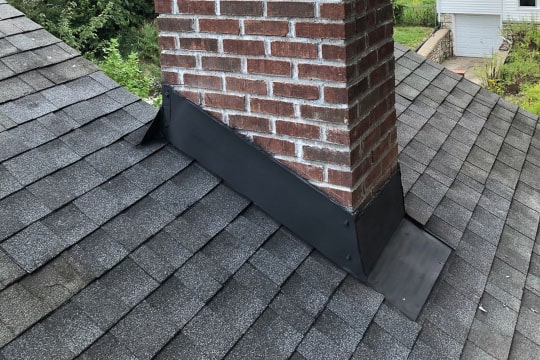
Chimney counter flashing is a metal component installed where the chimney meets the roof. It covers the upper edge of the underlying flashing to help prevent rainwater from entering the joint between the masonry and roofing materials.
A chimney flashing system may include several components:
- Base flashing: Helps protect the area where the chimney meets the roof.
- Step flashing: Metal pieces installed in overlapping layers along the sides of a chimney where it meets a shingle roof.
- Counter flashing: Covers the upper edge of the underlying flashing and helps direct water away from the joint.
- Chimney cricket: A sloped structure installed behind certain chimneys to divert water around the uphill side.
These components work together to help keep water out of the roof assembly. Counter flashing alone cannot compensate for damaged shingles, improperly installed step flashing, or deteriorated chimney masonry.
For additional background, read this roof flashing installation guide from IKO.
6 Signs You Need Chimney Counter Flashing Repair
Identifying flashing problems early can help reduce the risk of water damage. The following warning signs indicate that your chimney and surrounding roof may need professional inspection.
Water Stains on Ceilings Near the Chimney
Brown or yellow stains on ceilings near a chimney or fireplace can indicate moisture intrusion. Other symptoms include peeling paint, bubbling drywall, and damp patches.
Water can travel along roof decking and framing before becoming visible indoors. Therefore, the location of a ceiling stain does not always identify the exact point where water entered.
If stains become more noticeable after rainfall, arrange an inspection to identify the source before repairing the interior finishes.
2. Loose or Separated Counter Flashing
Counter flashing should remain securely attached to the chimney and overlap the underlying flashing correctly.
If sections appear bent, lifted, detached, or separated from the masonry, rainwater may enter behind the metal. Movement can result from poor installation, deteriorating mortar, weather exposure, or the natural expansion and contraction of building materials.
Simply applying fresh caulking over a gap may not solve the underlying problem. The flashing and its attachment should be assessed before deciding on the repair.
3. Cracked or Deteriorating Mortar Joints
Counter flashing on masonry chimneys is often secured into mortar joints or installed using a suitable surface-mounted detail.
Over time, mortar can crack, weaken, or deteriorate. When this happens, the flashing may become loose and leave gaps that allow water to enter.
Cracked mortar can also allow moisture to penetrate the chimney independently of a flashing defect. A professional inspection can establish whether the problem requires flashing repair, masonry repointing, or both.
4. Rust or Corrosion on Metal Flashing
Flashing materials can deteriorate because of prolonged moisture exposure, corrosion, and ageing.
Visible rust, holes, thinning metal, or damaged edges may indicate that the flashing can no longer provide reliable protection. The extent of the damage determines whether a localized repair is possible or replacement is more appropriate.
The condition of the surrounding roofing materials should also be checked to identify any related damage.
5. Recurring Roof Leaks After Rain
A leak that returns after rainfall may indicate that a previous repair failed to address the actual source of water entry.
For example, applying sealant over a gap may provide temporary relief without correcting loose metal, deteriorated mortar, or incorrectly installed flashing.
Recurring leaks should be investigated rather than repeatedly patched. A proper assessment can help distinguish counter flashing failure from problems with step flashing, shingles, chimney masonry, or other roof components.
6. Damp Insulation or Musty Odours in the Attic
Water entering around a chimney can spread into nearby roof decking and insulation. Damp insulation, discoloured wood, and persistent musty odours may indicate a moisture problem.
These symptoms are not exclusive to chimney flashing failure. Other roof leaks and ventilation-related moisture issues can produce similar conditions.
Avoid climbing onto a wet roof or entering an unsafe attic to investigate. A qualified roofing professional can inspect the affected area safely.
What Causes Chimney Counter Flashing to Fail?
Understanding the cause of flashing damage helps homeowners choose a repair that addresses the problem rather than just its visible symptoms.
Prolonged Rain and Moisture Exposure
Vancouver’s wet weather makes effective roof drainage and properly installed flashing particularly important. Repeated exposure to moisture can reveal weaknesses in poorly sealed joints, damaged metal, or incorrectly fitted flashing.
If gaps are present, water may enter the roofing assembly and cause damage to surrounding materials.
Poor Installation
Incorrect flashing overlaps, unsuitable attachment methods, and inadequate detailing can allow water to bypass the protective barrier.
Counter flashing must work with the underlying flashing and the surrounding roofing materials. A repair should correct installation defects rather than rely solely on surface sealant.
Ageing Sealant and Deteriorated Mortar
Sealants can lose adhesion and crack over time. Mortar joints can also weaken because of weather exposure and ageing.
Where a flashing system depends on a sealed joint, the joint must remain suitable for its intended purpose. However, not every flashing problem can be resolved by applying new caulking.
Corrosion or Physical Damage
Corrosion, wind exposure, loose attachments, and previous repair work can damage metal flashing.
A professional can assess whether the affected section can be repaired or whether replacement is needed to restore adequate coverage and secure attachment.
Poor Water Drainage Behind the Chimney
A chimney can obstruct water flowing down a roof, particularly when the structure is wide or the roof configuration creates a drainage problem.
Some wider chimneys may require a cricket to direct water around the uphill side. The need for one depends on the chimney dimensions, roof design, and applicable requirements.
How Much Does Chimney Counter Flashing Repair Cost in Vancouver?
The cost of chimney counter flashing repair in Vancouver depends on the type and extent of damage, the materials required, roof accessibility, and whether additional roofing or masonry work is necessary.
There is no single price that applies to every chimney. Without a verified local pricing source and an assessment of the specific roof, quoting a fixed Vancouver repair range could be misleading.
The following table explains the main types of work that may affect your estimate.
Type of repair | What it may involve |
Minor localized repair | Correcting a small, repairable defect in an otherwise serviceable flashing assembly |
Counter flashing repair | Securing loose sections and addressing an appropriate repairable joint |
Counter flashing replacement | Removing damaged metal and installing suitable replacement flashing |
Complete chimney reflashing | Reworking the counter flashing and underlying flashing components where necessary |
Combined roofing and masonry work | Repairing flashing alongside damaged shingles, mortar joints, or roof decking |
These are repair categories, not fixed price quotations. A contractor should inspect the roof and explain the required work before providing a reliable estimate.
Factors That Affect Chimney Flashing Repair Costs
- Extent of damage
A small, isolated defect generally requires less work than extensive corrosion or a flashing assembly that has failed in several places.
- Chimney size and design
Larger or more complex chimneys may require additional metal, custom fabrication, and more installation time.
- Roof accessibility
Steep slopes, difficult access, and additional safety requirements can increase labour and equipment costs.
- Flashing material
The cost depends on the selected metal, its compatibility with the existing roofing system, and the fabrication required.
- Underlying roof damage
If water has damaged shingles, underlayment, or roof decking, additional repairs may be necessary.
- Masonry condition
Cracked or deteriorated mortar may need to be repaired before the counter flashing can be properly secured.
- Scope of the repair
Renewing a suitable joint is different from removing old flashing, preparing the masonry, and installing a complete replacement assembly.
When comparing quotes, ask whether labour, materials, disposal, masonry work, and any related roof repairs are included. You should also confirm the warranty and request a written description of the proposed work.
Should You Repair or Replace Chimney Counter Flashing?
The correct approach depends on the condition of the metal, the attachment method, and the surrounding roofing system.
When Repair May Be Sufficient
A localized repair may be suitable when the flashing remains in good condition, and the problem is limited to a repairable joint or attachment.
For example, a contractor may be able to correct a small separation or secure a loose section without replacing the entire assembly.
However, the underlying flashing and surrounding roofing materials must also be in serviceable condition.
When Replacement Is Necessary
Replacement may be appropriate when the flashing is extensively corroded, perforated, badly distorted, incorrectly installed, or no longer provides adequate coverage.
Recurring leaks may also indicate that the underlying flashing arrangement needs to be corrected rather than patched again.
If moisture has damaged roof decking, insulation, or interior finishes, those issues should be assessed separately and included in the repair plan where necessary.
The goal is to restore an effective water-shedding system, not simply to conceal a visible gap.
What Happens During Professional Chimney Flashing Repair?
A professional repair should begin with identifying the source of the leak and evaluating the condition of the entire flashing assembly.
Step 1: Inspect the Chimney and Roof
The contractor examines the counter flashing, underlying step and base flashing, surrounding shingles, visible mortar joints, and other relevant roof details.
Step 2: Identify the Source of the Leak
The inspection determines whether water entry is related to loose metal, failed joints, corrosion, damaged roofing materials, deteriorated masonry, or another defect.
This helps avoid unnecessary work on components that are not responsible for the leak.
Step 3: Repair or Replace Damaged Components
Depending on the findings, the contractor may repair a localized defect or remove and replace the affected flashing.
The finished installation should maintain appropriate overlaps and secure attachment. Where the design requires it, counter flashing should be correctly integrated with the chimney masonry.
Step 4: Check for Related Damage
The contractor checks whether nearby shingles, underlayment, mortar joints, or roof decking have been affected by moisture.
Any additional work should be explained before it is undertaken.
Step 5: Review the Completed Work
The completed repair should be checked for secure attachment, suitable overlaps, and properly finished joints.
Ask for photographs of the affected area before and after the repair, together with written details of the work and applicable warranty.
How to Prevent Future Chimney Flashing Problems
Regular maintenance can help identify potential problems before they lead to more extensive repairs.
- Schedule periodic roof inspections: Include chimney flashing in routine maintenance, particularly if the roof is ageing or has previously leaked.
- Address damaged mortar: Have deteriorating masonry joints assessed before they compromise flashing attachment.
- Keep drainage areas clear: Manage leaves and debris around the chimney safely to help water drain away.
- Avoid repeated temporary patches: Surface sealant cannot correct every underlying flashing defect.
- Investigate recurring leaks promptly: Persistent moisture can damage insulation, timber, drywall, and interior finishes.
- Keep repair records: Save inspection reports, photographs, invoices, and warranty information for future reference.
Never climb onto a wet, icy, or steep roof to inspect flashing yourself. Elevated roof work can be dangerous and should be handled by appropriately equipped professionals.
Frequently Asked Questions
What is the purpose of chimney counter flashing?
Chimney counter flashing covers the upper edge of the underlying flashing and helps prevent water from entering the joint between the chimney masonry and roof.
How do I know if my chimney flashing is leaking?
Common warning signs include ceiling stains near the chimney, recurring leaks after rainfall, loose or corroded metal, deteriorated mortar, and damp insulation near the chimney. A professional inspection can help identify the actual source.
How much does chimney counter flashing repair cost in Vancouver?
The cost depends on the damage, flashing material, chimney design, roof accessibility, and whether masonry or roofing repairs are also required. Request an inspection and written estimate for an accurate price for your property.
Can chimney counter flashing be repaired without replacing it?
Yes, if the metal remains serviceable and the defect is localized. Extensive corrosion, holes, poor installation, or widespread damage may require replacement.
Is caulking enough to fix a chimney flashing leak?
Not always. Caulking may be appropriate for certain joints, but it cannot correct damaged metal, incorrect flashing overlaps, or deteriorated underlying components. The cause of the leak should be identified before choosing a repair.
Final Thoughts
Chimney counter flashing helps protect the vulnerable connection between your chimney and roof. When the metal becomes loose, corroded, or separated from the masonry, rainwater may enter the roof assembly and damage surrounding materials.
For Vancouver homeowners, recognizing early warning signs such as ceiling stains, recurring leaks, damaged flashing, and deteriorated mortar can help prevent a minor defect from developing into a more extensive repair.
Repair costs depend on the condition of the existing installation, roof accessibility, materials, and any additional roofing or masonry work. A professional inspection is the most reliable way to identify the cause of the problem and determine the appropriate solution.
If you suspect a chimney flashing issue, arrange an assessment before the damage spreads. Correcting the underlying defect can help protect your roof and maintain your home’s resistance to wet weather.
Need Help With a Roofing Problem?
If you have noticed signs of a chimney leak or damaged flashing, Tymey Roofing can be contacted to discuss your roofing concerns and the next steps for an assessment.
Tymey Roofing
Website: https://tymeyroofing.com
Email: info@tymeyroofing.com
Phone: +1 (604) 876-5101
Leave a Reply