

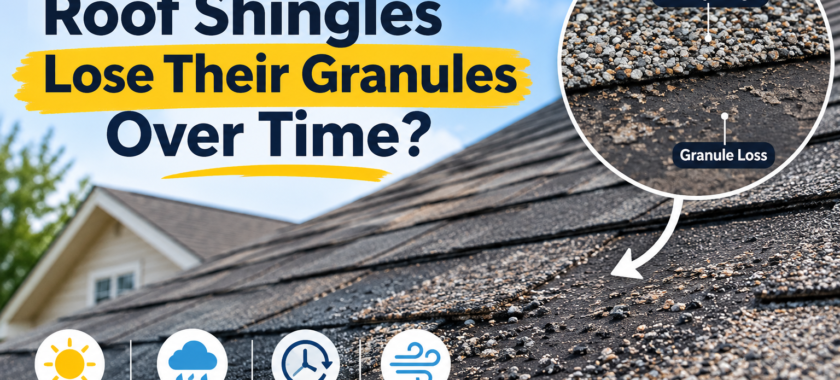
Introduction
When you clean your gutters and notice a layer of small, sand-like particles collecting at the bottom, you might assume your roof is starting to fall apart. These particles could be mineral granules from your asphalt shingles, but their presence does not always mean something is wrong.
Granules are an essential part of an asphalt roofing system. They protect the underlying asphalt from ultraviolet (UV) radiation, contribute to the shingles’ weather resistance, and give the roof its finished appearance. As shingles age or experience physical damage, some of these granules can become detached and wash into the gutters.
The important question is not simply why granules are disappearing. It is whether the loss is part of normal shingle weathering or evidence that the roofing material is deteriorating prematurely.
For homeowners in Vancouver, Coquitlam, Burnaby, and Surrey, understanding this difference can help prevent unnecessary repairs while identifying genuine roofing problems before they become more serious.
In this guide, we examine the factors behind asphalt shingle granule loss, what different damage patterns can reveal, how to assess the condition of your roof, and when professional roofing attention may be necessary.
What Happens to Asphalt Shingles When Their Granules Begin to Disappear?
Asphalt shingles are manufactured using a fibreglass or other reinforcing base, asphalt coating, and a protective mineral surface. The granules are pressed into the asphalt while it is still hot, creating the textured outer layer.
This surface is not simply decorative. It performs an important protective function.
The Protective Role of Roofing Granules
Mineral granules help protect asphalt shingles in several ways:
- UV protection: They shield the asphalt coating from direct sunlight, which can contribute to material ageing.
- Weather exposure: They form part of the outer protective surface that faces rain, wind, and other environmental conditions.
- Surface durability: They help provide a protective finish against normal environmental exposure.
- Appearance: Their mineral composition creates the colours and textures commonly seen on residential roofs.
When granules become detached, the asphalt coating underneath may become exposed. This creates a greater opportunity for UV-related deterioration and can contribute to premature shingle ageing.
However, a few missing granules do not automatically mean that a shingle has lost its ability to protect the home. The extent, location, and cause of the loss all matter.
7 Reasons Roof Shingles Lose Their Granules
Granule loss is influenced by several factors, including manufacturing, installation, environmental exposure, and the physical condition of the roofing system.
Understanding these causes makes it easier to distinguish normal wear from problems that require attention.
Loose Manufacturing Granules on Newly Installed Shingles
One reason homeowners find granules in their gutters is the manufacturing process itself.
During production, manufacturers apply more mineral granules than the asphalt surface ultimately needs. Some particles become firmly embedded, while others remain loosely attached.
These excess particles are commonly called rider granules or hitchhiker granules.
After installation, rainfall and normal weather exposure can gradually wash away these loose particles. This is generally considered normal, especially during the early life of a new roof.
According to GAF’s technical guidance on normal granule shedding on newly installed shingles, initial granule loss is often most noticeable shortly after installation and gradually decreases over time.
. IKO also explains that loose excess granules can appear in gutters during the early years of shingle exposure.
What homeowners should understand: Granules in the gutters of a newly installed roof do not automatically indicate poor installation or defective shingles. The concern increases when significant shedding continues, the shingles develop bare patches, or other damage becomes visible.
Natural Ageing of the Asphalt Coating
Asphalt shingles are continuously exposed to outdoor conditions. Over the years, the materials gradually weather, and the bond holding the mineral granules can weaken.
This is particularly relevant for older roofing systems that have experienced years of sunlight, rainfall, and temperature changes.
As the asphalt coating ages, individual granules may become easier to dislodge. The surface can also develop visible wear, making the roof look uneven or faded.
Unlike the loose particles found on new shingles, granule loss associated with ageing may continue alongside other signs of deterioration, such as:
- Brittle or cracked shingles.
- Irregular dark areas.
- Curling shingle edges.
- Exposed asphalt coating.
- Repeated granule accumulation in gutters.
Natural ageing does not affect every roof at the same rate. Material quality, installation, ventilation, maintenance, and environmental exposure all influence how a roofing system performs.
UV Radiation and Prolonged Sun Exposure
Sunlight is one of the environmental factors that gradually affects asphalt roofing materials.
The mineral granules help shield the asphalt from ultraviolet radiation. When parts of this protective layer disappear, the exposed asphalt receives more direct sunlight.
Over time, UV exposure can contribute to asphalt deterioration and changes in the shingle surface.
Roof sections that receive different amounts of sunlight may also show different ageing patterns. For example, a south-facing slope may experience different exposure from a shaded section beneath nearby trees.
This does not mean that every sun-exposed roof will experience excessive granule loss. It means that the condition of the protective surface becomes increasingly important as shingles age.
Wind, Hail, and Physical Impact
Severe weather can cause granule loss even when the roof is not particularly old.
Wind-driven debris can strike or scrape shingles, while hail can create localised impact damage.
The resulting damage may appear as small areas where the protective mineral surface has been disturbed.
Storm-related granule loss can be accompanied by:
- Localised bald spots.
- Bruising or impact marks.
- Damaged shingle edges.
- Displaced or lifted shingles.
- Granule accumulation concentrated below affected roof sections.
GAF’s technical guidance identifies granule loss and punctures among the possible consequences of extraordinary wind events. Its storm-damage guidance also explains that significant granule loss can expose the asphalt coating to environmental deterioration.
After a significant storm, homeowners should consider a professional roof assessment, particularly when visible damage or new leaks appear.
Excessive Foot Traffic During Roofing Work
Asphalt shingles are not designed to withstand unnecessary walking and repeated physical contact.
Foot traffic can rub against the mineral surface, dislodge granules, and damage vulnerable shingle edges.
This is especially important during roof repairs, inspections, equipment installation, or maintenance work.
Repeated movement across the same section can create localised wear that differs from the gradual ageing seen across an entire roof.
Homeowners should avoid walking on their shingles to investigate suspected granule loss. A professional roofer can assess the surface using appropriate access and safety procedures.
Concentrated Water Runoff and Drainage Problems
Rainwater is not usually a problem for properly installed asphalt shingles. However, concentrated water discharge can contribute to localised surface erosion.
For example, when an upper roof’s downspout releases water directly onto a lower shingle section, the repeated flow can affect the same area over time.
Blocked or damaged drainage components can also create water-management problems around roof edges.
The important distinction is between normal rainfall and repeated concentrated discharge. If granule loss appears in a narrow, consistent area below a drainage outlet, the water flow should be investigated.
Add Your Heading Text HImproper Cleaning and Roof Maintenanceere
Roof cleaning methods can sometimes cause more damage than the original maintenance problem.
Pressure washing, aggressive scraping, and hard-bristle brushing can remove granules from asphalt shingles.
Moss removal requires particular care because moss can attach itself to shingle surfaces and grow around the edges.
Using excessive force to remove it can disturb the protective coating and weaken the shingle surface.
For homes in British Columbia, proper maintenance should focus on suitable moss-control methods, debris management, drainage, and professional assessment rather than aggressive cleaning.
What Does the Pattern of Granule Loss Tell You About Your Roof?
One of the most useful ways to understand shingle deterioration is to examine where the granules are disappearing.
Granule loss does not always occur evenly. Its distribution can provide clues about the underlying cause.
What you notice | Possible explanation |
Small amounts of granules across a new roof | Loose manufacturing granules |
Widespread surface wear on an older roof | Natural ageing |
Isolated bare patches | Physical impact or localised damage |
Damage below an upper downspout | Concentrated water discharge |
Scraped or scuffed sections | Foot traffic or improper cleaning |
New damage following a storm | Possible wind or hail damage |
These patterns are useful indicators, not definitive diagnoses. A roofer should examine the shingles and surrounding roofing components before recommending a repair.
How to Tell Normal Granule Shedding from Actual Shingle Deterioration
Finding granules in your gutters is only one part of the assessment. The more important question is whether the shingles themselves are losing their protective surface.
Normal Granule Shedding
Normal shedding may involve:
- Small amounts of loose granules in gutters.
- Granule loss shortly after roof installation.
- No noticeable bare patches on the shingles.
- No associated cracking or curling.
- A reduction in loose particles over time.
IKO explains that excess manufacturing granules can wash away during the first years of roof exposure without reducing the weatherproofing life of the shingles.
Signs of Actual Deterioration
More concerning conditions include:
- Large areas of missing granules.
- Visible asphalt coating.
- Uneven or patchy shingle surfaces.
- Cracked or brittle roofing materials.
- Recurring granule accumulation that does not decrease.
- Water intrusion or other signs of roof failure.
A particularly important distinction is whether the loss exposes the underlying asphalt. IKO identifies exposed asphalt as a key point at which granule loss becomes a concern for shingle performance.
Why Granule Loss Can Become a Bigger Roofing Problem
Granule loss is not always an immediate cause of roof leaks. However, extensive deterioration can affect the protective performance of asphalt shingles.
There are several ways this can become a larger problem.
Increased Exposure of the Asphalt Layer
When granules disappear, the underlying asphalt becomes more exposed to UV radiation.
This can contribute to accelerated ageing, particularly when the loss affects larger sections of the roofing surface.
Greater Vulnerability to Further Deterioration
A damaged shingle surface may become more vulnerable to continued environmental exposure.
If the same section is also experiencing cracking, lifting, or other physical damage, the overall condition may deteriorate further.
Potential Moisture Intrusion
Granule loss alone does not necessarily create an opening through which water can enter.
However, when it occurs alongside cracked shingles, damaged seals, or missing roofing material, the risk of water penetration increases.
Moisture can then affect the underlayment, roof decking, insulation, and interior finishes.
Reduced Remaining Service Life
A roof with extensive granule loss may have less useful service life remaining than a comparable roof with an intact protective surface.
The actual condition depends on the roofing material, age, installation, and extent of damage.
For homeowners, the key is to identify deterioration before it develops into widespread roofing failure.
How British Columbia's Weather Can Affect Asphalt Shingle Performance
Roofing systems in the Lower Mainland experience different environmental conditions throughout the year.
In Vancouver, Coquitlam, Burnaby, and Surrey, prolonged wet periods, seasonal storms, tree debris, and changing temperatures make regular roof maintenance important.
However, rainfall should not be blamed automatically for every case of granule loss.
Persistent Moisture and Shaded Roof Sections
Roof areas beneath trees or beside taller buildings may receive less direct sunlight and take longer to dry after rainfall.
These conditions can encourage moss growth and organic debris accumulation.
Moss can retain moisture against the roofing surface and may contribute to shingle deterioration if left unmanaged.
Seasonal Storm Exposure
Wind-driven debris and severe weather can cause localised damage.
After a storm, homeowners should look for displaced shingles, visible impact marks, and unusual granule accumulation.
Drainage and Gutter Conditions
Proper drainage helps move rainwater away from the roofing system.
Blocked gutters, damaged downspouts, and concentrated water discharge should be addressed because they can contribute to localised roofing problems.
Tymey Roofing explains these maintenance concerns in its existing guide:
Roof Maintenance Guide for Coquitlam Homeowners in Rainy Weather Conditions.
What Should You Do When You Notice Granules in Your Gutters?
Before arranging extensive roofing work, take a closer look at the symptoms.
The following steps can help you understand the situation without putting yourself at risk.
Step 1: Consider the Age of Your Roof
A newly installed roof may release some excess manufacturing granules.
An older roof with increasing granule accumulation deserves closer attention, particularly when other signs of deterioration are present.
Step 2: Observe the Amount and Location
Check whether granules are collecting throughout the gutter system or mainly beneath one roof section.
Concentrated accumulation may indicate a localised issue, while widespread deterioration may suggest a broader problem.
Avoid treating gutter accumulation alone as proof that the roof needs replacement.
Step 3: Look for Visible Shingle Damage
From a safe position on the ground, look for:
- Dark or bare patches.
- Uneven shingle surfaces.
- Missing or lifted shingles.
- Cracked or curled edges.
- Areas that appear different from the surrounding roof.
Never climb onto the roof to examine these conditions yourself.
Step 4: Check for Interior Warning Signs
Look for ceiling stains, damp attic insulation, musty smells, or visible moisture around upper walls.
These symptoms do not always originate from granule loss, but they can indicate an underlying roofing or moisture problem.
Step 5: Arrange a Professional Roof Inspection
If the granule loss appears excessive, continues over time, or occurs alongside other damage, arrange an inspection.
A professional assessment can help identify whether the problem is related to ageing, storm damage, installation, drainage, or another roofing issue.
For a detailed explanation of what professionals assess, read Tymey Roofing’s existing guide:
Can You Repair Shingles That Have Lost Their Granules?
Yes, in certain situations. However, the appropriate solution depends on the condition of the affected shingles and the surrounding roofing system.
When Individual Shingle Replacement May Be Suitable
Localised replacement may be appropriate when:
- Only a few shingles are damaged.
- The surrounding roofing material remains in good condition.
- The damage is limited to a specific area.
- Compatible replacement shingles are available.
- The roof has sufficient remaining service life.
A professional roofer can determine whether individual shingles can be replaced without compromising the surrounding materials.
When More Extensive Roofing Work Is Necessary
If granule loss affects several roof sections, the shingles are extensively deteriorated, or repeated leaks are occurring, a larger repair or replacement assessment may be necessary.
Simply adding loose granules or applying a surface coating is not a permanent solution to damaged asphalt shingles.
The aim should be to restore the protective roofing system rather than temporarily improve its appearance.
Roof Repair or Roof Replacement: Which Is the Better Option?
Not every roof with granule loss needs complete replacement.
The decision should consider the overall condition of the roofing system rather than one isolated symptom.
Assessment factor | Roof repair | Roof replacement |
Extent of damage | Limited sections | Widespread deterioration |
Shingle condition | Most shingles remain sound | Extensive cracking or wear |
Roof age | Sufficient remaining service life | Near the end of useful service life |
Leaks | Isolated and repairable | Repeated or widespread |
Long-term suitability | Practical localised solution | Better long-term option |
A professional assessment should also consider the underlayment, flashing, roof decking, attic ventilation, and drainage.
For homeowners, the most cost-effective decision is not necessarily the smallest immediate repair. It is the solution that addresses the actual condition of the roof.
Frequently Asked Questions
Why are my new roof shingles losing granules?
New shingles may release excess manufacturing granules that were not firmly embedded in the asphalt coating. This is generally normal and should gradually decrease. Persistent heavy shedding or visible bare patches should be investigated.
Do granules protect asphalt shingles from sunlight?
Yes. Mineral granules help shield the underlying asphalt coating from ultraviolet radiation. When significant amounts disappear, the exposed asphalt becomes more vulnerable to environmental deterioration.
Can rain wash granules off roof shingles?
Rain can carry away granules that have already become loose. Normal rainfall should not cause healthy, properly installed shingles to lose large amounts of their protective surface.
Should I replace my roof if I find granules in the gutters?
No. Granules in gutters alone are not enough to justify roof replacement. The roof’s age, shingle condition, extent of granule loss, and any associated damage should be assessed first.
Can moss cause asphalt shingles to lose granules?
Moss can contribute to roofing deterioration by retaining moisture and affecting shingle surfaces. Aggressive moss removal can also dislodge granules. Appropriate maintenance methods are important.
Protect Your Asphalt Roof with Professional Roofing Maintenance
Granule loss is not always a sign of roof failure, but understanding its cause is essential for protecting your home. While some shedding is expected during normal shingle exposure, widespread or persistent loss can indicate that the protective roofing surface is deteriorating.
Whether your roof has developed bare patches, is shedding unusual amounts of granules, or has experienced storm-related damage, identifying the problem early can help you make a more informed maintenance decision.
Tymey Roofing provides roofing maintenance, inspections, repairs, and replacement services for homeowners in Vancouver, Coquitlam, Burnaby, Surrey, and surrounding communities.
Concerned about the condition of your asphalt shingles? Contact Tymey Roofing today to discuss your roofing concerns and arrange a professional assessment.
Address: Coquitlam, BC V3 1Y2, Canada
Phone: +1 (604) 876-5101
Email: info@tymeyroofing.com
Website: https://tymeyroofing.com/
Leave a Reply