

Introduction
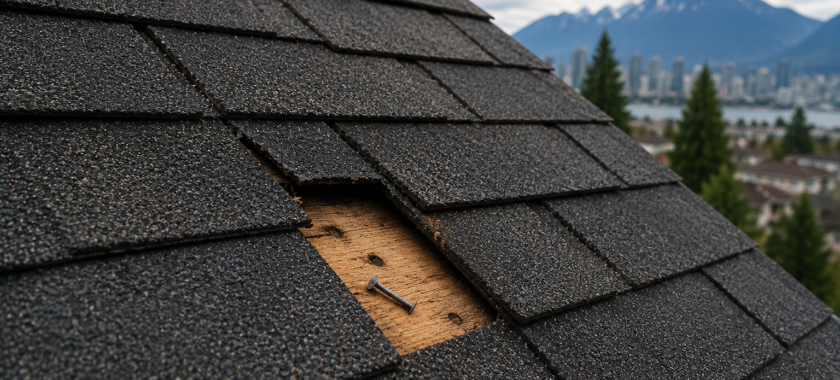
A roof may look perfectly fine from the ground, yet a small missing nail can create an opening where water can enter. Over time, that seemingly minor problem can contribute to damaged shingles, moisture intrusion, roof deck deterioration, and interior leaks.
So, can missing roof nails cause leaks? Yes. A missing or improperly installed roofing nail can leave a shingle unsecured and create a potential pathway for water. The risk becomes more significant when the roof is exposed to Vancouver’s frequent rain, wind, and changing weather conditions.
The good news is that identifying and repairing the problem early can often prevent a small roofing issue from becoming a costly repair.
What Happens When a Roof Nail Goes Missing?
Roofing nails are responsible for securing shingles to the roof deck. Each shingle needs to remain firmly in place so it can perform its job of directing rainwater toward the gutters.
When a nail is missing, several things can happen:
- The shingle may loosen or lift.
- Wind can get underneath the shingle.
- Rainwater may reach areas that should remain protected.
- The exposed fastening hole can become a point of moisture entry.
- Nearby shingles may become damaged as the problem progresses.
A single missing nail does not always cause an immediate interior leak. However, it can weaken the roofing system and increase the chance of water intrusion, particularly during heavy rain or strong winds.
How Missing Roof Nails Can Lead to Water Damage
A properly installed asphalt shingle roof works as a layered water-shedding system. Shingles overlap one another so that water flows downward instead of entering the roof structure.
When a nail is missing, that system can be compromised.
For example, imagine a shingle that originally had four properly positioned nails. If one nail becomes loose or falls out, part of the shingle may begin to lift. During a windstorm, the exposed edge can move repeatedly.
Water can then work underneath the shingle instead of flowing over it.
Once moisture gets underneath the roofing material, it may reach the underlayment or roof deck. If the problem continues, water can eventually travel into the attic or ceiling area.
This is why missing roof nails should not be dismissed simply because there is no visible water stain inside the home.
5 Signs You May Have Missing or Loose Roof Nails
Not every missing nail is visible from the ground, but homeowners can watch for warning signs.
1. Loose or Lifted Shingles
If a shingle appears raised, curled, or loose, it may have lost one or more fasteners.
A lifted shingle is particularly vulnerable in windy weather because air can get under it, increasing the damage.
2. Shingles Appearing Out of Alignment
Rows of shingles should generally form consistent lines. A shingle that looks unusually shifted may indicate a fastening problem.
3. Roofing Nails in the Gutters
Finding small roofing nails in gutters or around the property can be a warning sign.
One nail does not necessarily indicate widespread roof damage, but repeated nail loss warrants a professional inspection.
4. Water Stains on Ceilings or Walls
Brown or yellowish stains may indicate that water is entering somewhere above the affected area.
Keep in mind that the location of an interior stain does not always correspond directly with the location of the roof problem. Water can travel along roof decking, insulation, framing, or other materials before becoming visible indoors.
5. Increased Granules in Gutters
Excessive shingle granules can indicate aging or deteriorating shingles. When combined with loose shingles or missing fasteners, it may indicate that the roof requires closer inspection.
Missing Roof Nails vs. Other Roofing Problems
A roof leak does not automatically mean that missing nails are responsible. Several roofing problems can produce similar symptoms.
Problem | Common Cause | Leak Risk | Typical Solution |
Missing nail | Fastener failure or installation issue | Moderate to high | Replace/re-secure |
Damaged shingle | Wind, impact, age | High | Shingle replacement |
Failed flashing | Weather exposure or deterioration | High | Flashing repair/replacement |
Clogged gutters | Debris buildup | Moderate | Gutter cleaning |
Aging roof | Normal deterioration | Increasing | Repair or replacement |
Poor installation | Improper fastening or detailing | High | Professional correction |
If fastening problems are widespread or the roof is nearing the end of its service life, roof replacement may be a more practical long-term solution.
Can One Missing Nail Really Cause a Roof Leak?
Yes, but the circumstances matter.
A single missing nail may not immediately produce a noticeable leak. If the surrounding shingles and underlayment are still performing properly, water may continue to shed away from the affected area.
However, the missing fastener can allow the shingle to move.
Over time, repeated exposure to rain and wind can enlarge the problem. The shingle may become damaged, additional fasteners may loosen, and moisture can eventually reach vulnerable areas beneath the roofing material.
Example
Consider a Vancouver home with an otherwise well-maintained asphalt shingle roof.
A roofing nail becomes loose after years of weather exposure. The shingle begins lifting slightly. During a period of heavy rain and wind, water gets beneath the shingles.
The homeowner does not notice anything because there is no ceiling stain.
Months later, moisture has contributed to deterioration in the underlying roofing materials. What started as a relatively minor fastening issue may now require more extensive repair.
This is why early roof inspections can be valuable even when there is no obvious interior leak.
Why Vancouver Weather Can Make the Problem Worse
Vancouver’s wet climate makes effective roof maintenance particularly important.
Frequent rainfall means roofing materials are repeatedly exposed to moisture. Strong winds can also place additional stress on loose or improperly secured shingles.
If a nail is missing, the affected shingle may not provide the same level of protection as a properly secured one.
For homeowners in Vancouver, regular inspections are especially useful after periods of severe weather.
If you notice lifted shingles, roofing debris around your property, or new signs of moisture inside the home, arranging an inspection sooner rather than later can help identify the source.
How Much Does It Cost to Repair a Missing Roof Nail?
The cost of repairing missing roof nails varies depending on several factors, including:
- The number of missing or loose nails
- Roof size
- Roof pitch
- Accessibility
- Shingle condition
- Whether additional damage is present
- Whether the repair requires replacing shingles
- Whether the flashing or underlayment is also affected
A very small repair may be relatively inexpensive when the problem is isolated and easy to access.
However, if missing fasteners have contributed to damaged shingles or water intrusion, the total repair cost can increase.
Repair vs. Larger Roofing Work
Situation | Likely Approach |
One accessible missing fastener | Minor repair |
Several loose shingles | Localized roof repair |
Missing nails with damaged shingles | Shingle and fastener replacement |
Missing nails with water damage | Roof repair plus moisture-damage assessment |
Widespread fastening problems | More comprehensive roof inspection |
The best way to understand the actual cost is to have the roof inspected rather than estimating the repair solely from an interior water stain.
Should You Repair a Missing Roof Nail Yourself?
Homeowners may be able to identify obvious roofing problems from the ground, but climbing onto a roof introduces fall and property-damage risks.
There is also an important technical issue: simply putting a nail into a random location does not guarantee a proper repair.
Roofing fasteners need to be positioned correctly so they secure the shingle without creating additional vulnerabilities.
A professional roofer can determine whether the issue is limited to a missing fastener or whether the surrounding shingle, underlayment, flashing, or roof deck has also been affected.
How to Prevent Roof Nail Problems
Preventive maintenance can help extend the service life of your roofing system and identify small issues before they become major problems. For additional roofing maintenance guidance, homeowners can review professional recommendations from the National Roofing Contractors Association (NRCA). https://www.nrca.net/?utm_source=chatgpt.com
Schedule Regular Roof Inspections
A professional inspection can identify loose shingles, damaged flashing, deteriorating materials, and fastening problems that may not be visible from the ground.
Inspect After Severe Weather
After strong winds or prolonged heavy rainfall, check your property for:
- Loose roofing materials
- Shingle pieces
- Roofing nails
- Granules around downspouts
- Visible lifted shingles
If you notice anything unusual, consider arranging a professional inspection.
Keep Gutters Clean
Blocked gutters can contribute to water-management problems around the roof. Keeping gutters and downspouts clear helps rainwater move away from the roofing system and foundation properly.
Watch for Interior Warning Signs
Do not ignore:
- Ceiling stains
- Damp attic insulation
- Musty odors
- Peeling paint
- Water marks around skylights or roof penetrations
These signs may indicate moisture intrusion even when the roof looks acceptable from outside.
When Should You Call a Professional Roofer?
You should consider professional help if you notice multiple missing nails, lifted shingles, recurring leaks, visible roof damage, or signs of moisture inside your home.
Professional roofers can inspect the affected area and determine whether the problem is a simple repair or part of a larger roofing issue.
This distinction matters because repairing only the visible symptom may leave the underlying source of the leak unresolved.
Frequently Asked Questions
Can missing roof nails cause leaks?
Yes. A missing or loose roofing nail can allow a shingle to move and potentially create a pathway for water. The likelihood of a leak depends on the location of the missing fastener and the condition of the surrounding roofing materials.
How do I know if a roof nail is missing?
Look for loose or lifted shingles, roofing nails in gutters or around the property, displaced shingles, or visible fastening problems. A professional inspection is the safest way to identify hidden fastener issues.
Can a missing nail cause a ceiling leak?
It can. If water enters beneath a compromised shingle and travels through the roof assembly, it may eventually reach the attic or ceiling. However, ceiling leaks can have several causes, so the exact source should be investigated.
Is replacing one roof nail enough?
Sometimes. If the problem is isolated and the surrounding materials are undamaged, a localized repair may be sufficient. If the shingle or underlying materials are damaged, additional repairs may be necessary.
How often should a roof be inspected in Vancouver?
Regular inspections can help identify problems early, particularly after significant weather events. The appropriate inspection frequency also depends on the roof’s age, material, condition, and previous repair history.
Protect Your Roof Before a Small Problem Becomes a Big Repair
A missing fastener may seem insignificant, but roofing systems depend on hundreds or thousands of properly positioned components working together. When one part fails, the surrounding materials can become more vulnerable to wind and moisture.
If you suspect missing roof nails, loose shingles, or another roofing issue, an early inspection can help prevent unnecessary water damage and more expensive repairs.
For homeowners in Vancouver, BC, Tymey Roofing can assess the condition of your roof, identify potential leak sources, and recommend the appropriate repair based on the actual condition of the roofing system.
Don’t wait for a small roofing problem to become a major leak. Schedule a professional roof inspection and protect your home before the next heavy rainfall.
Leave a Reply