

Introduction
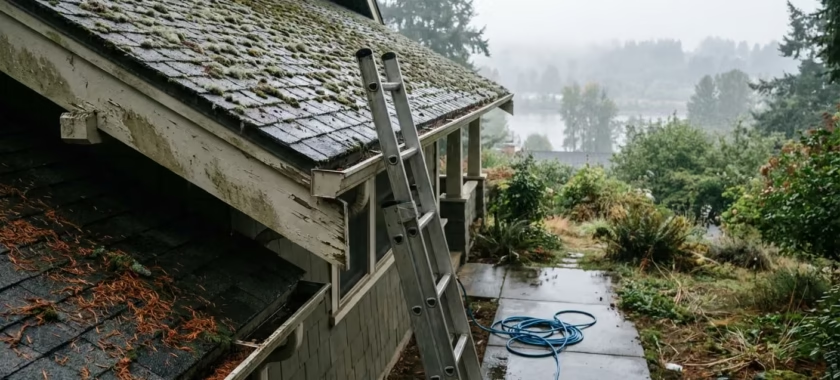
If you live in Vancouver or the Lower Mainland, you may have noticed green moss developing on your roof, particularly in shaded areas and around homes surrounded by trees. While a small amount of moss may initially seem like a cosmetic issue, established growth can become a roof maintenance concern if it is left untreated.
Understanding why roof moss grows in Vancouver can help homeowners take practical steps to reduce moss growth and protect their roofing system. Vancouver’s wet climate, shaded roof surfaces, overhanging trees, organic debris, and slow-drying conditions can create an environment where moss develops easily.
The good news is that homeowners can often reduce the likelihood of recurring moss with regular roof maintenance . Keeping gutters clear, managing nearby vegetation, removing accumulated debris, and arranging professional roof assessments when necessary can all help maintain the roof’s condition.
Why Does Roof Moss Grow So Easily in Vancouver?
Moss generally needs moisture, suitable temperatures and a surface where it can establish itself. Vancouver’s climate can provide several of these conditions for extended periods.
The Lower Mainland experiences mild, rainy winters, while spring and fall can also bring significant precipitation. These conditions can leave shaded portions of a roof damp for longer periods than areas exposed to direct sunlight.
Here are some of the most common reasons moss develops on Vancouver roofs.
Frequent Rain Keeps Roof Surfaces Damp
Rain does not automatically cause moss. The bigger concern is moisture that remains on a roof for an extended period.
A roof section that dries quickly after rainfall is less likely to provide consistently damp conditions than a shaded section that receives little sunlight.
This is one reason moss may appear on one roof slope while another section of the same roof remains relatively clear.
Shade Reduces Drying
North-facing and heavily shaded roof slopes can be more susceptible to moss because they may receive less direct sunlight.
Trees can increase this effect by blocking sunlight and reducing airflow around the roof.
For example, a roof underneath a large tree canopy may stay damp significantly longer than an exposed roof section. Over time, this can create more favourable conditions for moss growth.
Overhanging Trees Add Organic Debris
Trees around Vancouver homes can contribute to roof maintenance problems even when they are not physically touching the roof.
Leaves, needles, small branches and other organic material can collect on shingles and in roof valleys. When these materials become wet, they can retain moisture against the roofing surface.
Regularly managing vegetation around the home can therefore be an important part of moss prevention.
Poor Airflow Can Slow Drying
Air circulation helps moisture evaporate from the roof.
When branches are dense around the roof or landscaping restricts airflow, certain roof sections may remain damp for longer periods.
This does not mean poor airflow alone causes moss, but it can contribute to an environment where moss is more likely to establish and persist.
What Does Moss Do to a Roof?
A few small patches of moss do not automatically mean that a roof needs to be replaced. However, established growth should not simply be ignored.
Moss can retain moisture around the roofing surface and, on asphalt shingles, may grow around shingle edges. Over time, established moss can contribute to lifting or curling of shingle edges and may increase the risk of damage during windy conditions.
The effect depends on factors such as the amount of moss, how long it has been present, the type and condition of the roofing material, and the overall age of the roof.
A Simple Example
Imagine two homes with similar asphalt shingle roofs.
Home A:
The homeowner notices several small moss patches, arranges an assessment, removes nearby debris and trims branches that create excessive shade.
Home B:
The homeowner ignores the growth for several years. Moss spreads across larger shaded sections, debris accumulates and some shingle edges begin to deteriorate.
Both homes started with a relatively minor maintenance issue, but the second roof may eventually require more extensive work.
The lesson is simple: early maintenance is usually easier than dealing with a problem after it has progressed.
Moss vs. Algae: What Is the Difference?
Moss and algae are often confused because both can appear on roofing materials.
However, they are different types of growth and can have different effects on a roof.
Feature | Moss | Algae |
Appearance | Usually green and raised | Often dark, black or greenish streaks |
Texture | Fuzzy or vegetation-like | Usually flat |
Common conditions | Moist, shaded areas | Moist environments |
Main concern | Moisture retention and physical growth | Often primarily cosmetic discoloration |
Prevention | Moisture, shade and debris management | Reducing conditions that support growth |
Roof impact | Can affect shingle edges when established | Usually more aesthetic in nature |
Correctly identifying the problem matters because the appropriate treatment depends on the roofing material, the type of growth and the roof’s condition.
How to Prevent Roof Moss in Vancouver
The best approach to moss prevention is to reduce the conditions that allow it to establish.
No single maintenance step will guarantee that moss never returns, particularly on heavily shaded homes. However, combining several preventative measures can make a meaningful difference.
1. Trim Branches That Create Excessive Shade
Trees are valuable for landscaping and shade, but branches that extend directly over a roof can increase maintenance requirements.
Trimming appropriate branches can:
- Increase sunlight exposure
- Improve airflow
- Reduce leaves and needles reaching the roof
- Reduce organic debris accumulation
- Help roof surfaces dry more quickly
Tree work should be performed carefully, especially around power lines or large branches. A qualified arborist may be appropriate for larger or hazardous trees.
2. Keep the Roof Clear of Debris
Leaves, needles, and branches should not be allowed to accumulate on the roof, particularly in valleys and other areas where water naturally moves.
Removing debris helps reduce moisture retention and supports normal drainage.
However, roof cleaning should be performed carefully. Asphalt shingles can be damaged by aggressive brushing or high-pressure washing.
3. Keep Gutters and Downspouts Clear
Roof drainage is an important part of preventing moisture-related problems.
Blocked gutters can prevent water from draining properly and may allow wet organic material to remain around the roof edge.
Regularly check gutters and downspouts for:
- Leaves
- Needles
- Sediment
- Moss debris
- Small branches
- Blockages
B.C. FireSmart guidance also recommends keeping roofs and gutters clear of combustible debris, providing another practical reason to maintain these areas.
4. Monitor Shaded Roof Areas
If your home is surrounded by mature trees, pay particular attention to roof sections that receive little sunlight.
You may notice moss repeatedly returning to the same slope even after treatment. In that situation, simply removing the visible growth may not address the conditions that encourage it.
Consider whether nearby branches, debris accumulation, or drainage problems are contributing to the issue.
5. Arrange Regular Roof Assessments
A yearly visual check is a practical starting point for many homeowners.
Properties with heavy tree coverage, recurring moss, older roofing materials, or previous roof problems may benefit from more frequent professional assessment.
A roof assessment can identify:
- Moss or algae growth
- Damaged shingles
- Lifted shingle edges
- Flashing problems
- Blocked drainage areas
- Signs of moisture intrusion
- Deteriorating roofing materials
Early identification gives homeowners more options than waiting until a leak develops.
Can You Pressure Wash Moss Off an Asphalt Roof?
Pressure washing is not recommended for asphalt shingles.High-pressure water can remove protective granules from shingles and potentially damage the roofing surface. Aggressive mechanical cleaning can create similar problems.
This is particularly important because a roof may look cleaner immediately after pressure washing while having suffered unnecessary surface damage.
Instead, the appropriate cleaning or treatment method should be selected according to:
- Roofing material.
- Manufacturer recommendations.
- Roof condition.
- Amount of moss.
- Roof pitch and accessibility.
- Surrounding landscaping.
Professional roof cleaning should focus on controlling the growth without unnecessarily damaging the roofing material.
Should You Remove Roof Moss Yourself?
Some homeowners may be comfortable handling basic ground-level maintenance, such as clearing accessible gutters or managing nearby vegetation.
Roof-level moss removal is different.
Wet roofs can be slippery, and moss-covered surfaces can create additional fall hazards. Cleaning activities can also cause accidental damage to shingles, flashing or other roofing components.
DIY removal may result in:
- Broken or lifted shingles.
- Loss of protective granules.
- Damaged flashing.
- Incorrect use of cleaning products.
- Personal injury.
- Incomplete removal.
- Moss returning because the underlying conditions were not addressed.
For steep, high or heavily affected roofs, professional assessment is the safer option.
Roof Moss Removal vs. Roof Replacement
One of the most important points for homeowners is that moss does not automatically mean you need a new roof.
The correct solution depends on the overall condition of the roofing system.
Roof Condition | Potential Next Step |
Small, isolated moss patches | Assessment and targeted maintenance |
Moderate moss on shaded sections | Professional treatment or cleaning |
Thick, established moss | Detailed assessment and appropriate treatment |
Lifted or damaged shingles | Roof repair may be required |
Active leaks or significant deterioration | Professional roof assessment |
Older roof with widespread damage | Replacement may need to be considered |
For example, if an otherwise serviceable roof has limited moss but no major shingle damage, replacement may be unnecessary.
On the other hand, if moss is present alongside widespread shingle deterioration, leaks and significant granule loss, simply cleaning the roof may not solve the underlying problem.
How Much Does Roof Moss Removal Cost in Vancouver?
Roof moss removal and cleaning costs can vary considerably between properties.
Factors that influence pricing include:
- Roof size.
- Roof pitch.
- Number of storeys.
- Roof accessibility.
- Amount of moss.
- Roofing material.
- Amount of debris.
- Required safety equipment.
- Additional maintenance or repair work.
As a general 2026 market reference, Vancouver-area pricing guides commonly place residential roof moss removal or cleaning in a broad range of approximately $300 to $1,200, while larger homes, heavy moss growth and difficult roof access can increase the cost. Some local providers report standard residential projects around the mid-hundreds to over $1,000.
These figures are general market estimates rather than fixed Tymey Roofing prices. The actual cost should be determined after considering the specific roof and the work
A Practical Roof Moss Maintenance Guide for Vancouver Homeowners
A seasonal maintenance routine can help homeowners notice moss and other roof problems earlier.
Spring Roof Check
After the wetter months, check for:
- New moss growth.
- Accumulated leaves and needles.
- Damaged shingles.
- Blocked gutters.
- Overflow marks.
- Signs of moisture around roof penetrations.
Spring is also a useful time to assess whether tree growth has created excessive shade.
Summer Maintenance
Drier weather can be a convenient time to address maintenance concerns.
Consider:
- Professional roof assessment if moss is present.
- Tree trimming where appropriate.
- Gutter maintenance.
- Debris removal
- Inspection of flashing and roof penetrations.
Fall Preparation
Before the wettest part of the year:
- Clear leaves and needles.
- Check gutters and downspouts.
- Inspect shaded roof sections.
- Look for new moss growth.
- Confirm that water can drain properly.
This is especially important for homes surrounded by mature trees.
Winter Monitoring
Avoid unnecessary roof traffic during wet or slippery conditions.
Instead, monitor the roof from a safe location and watch for:
- Water stains on ceilings.
- Damp areas in the attic.
- Overflowing gutters.
- Visible roof damage.
- New leaks during heavy rain.
If you notice signs of water intrusion, arrange a professional assessment rather than waiting for the problem to become more severe.
Final Thoughts
Understanding why roof moss grows in Vancouver helps homeowners take a more preventative approach to roof maintenance.
Vancouver’s wet climate, combined with shade, nearby trees, organic debris and slow-drying roof surfaces, can create favourable conditions for moss. While a small amount of moss does not automatically mean that a roof needs replacement, established growth should be assessed before it becomes a larger maintenance concern.
Homeowners can reduce moss-friendly conditions by keeping gutters clear, controlling excessive vegetation, removing roof debris safely and monitoring shaded areas. Regular inspections can also help identify damaged shingles, drainage problems and moisture concerns before they develop into more expensive repairs.
Most importantly, avoid aggressive pressure washing on asphalt shingles. High-pressure cleaning can remove protective granules and damage the roofing surface. The appropriate cleaning method should always take the roofing material, manufacturer recommendations and roof condition into account.
If you are noticing moss on your Vancouver-area roof, professional assessment can help determine whether the right solution is maintenance, moss treatment, repair or, when necessary, replacement.
Frequently Asked Questions
Why does roof moss grow so easily in Vancouver?
Vancouver’s wet climate, combined with shaded roof areas, nearby trees, organic debris and slow drying, creates conditions that can support moss growth.
Is moss on a roof a serious problem?
Small amounts may be primarily a maintenance concern, but established moss can retain moisture and contribute to shingle-edge lifting or deterioration over time.
Can I pressure wash moss off my asphalt roof?
Pressure washing is generally not recommended for asphalt shingles because high-pressure water can remove protective granules and damage the roofing surface.
Does moss mean my roof needs to be replaced?
No. Moss alone does not determine whether a roof needs replacement. The age, condition, damage, leaks, and remaining serviceability of the roofing system should also be considered.
How can I prevent moss from returning?
Reduce excessive shade where practical, keep the roof and gutters clear of debris, maintain proper drainage and arrange periodic roof assessments, especially if your home has heavy tree coverage.
Protect Your Roof from Moss and Moisture
Moss may seem like a minor issue at first, but continued moisture and unchecked growth can contribute to roofing problems over time. If you notice moss, excessive debris, damaged shingles, or areas of your roof that stay damp, a professional assessment can help you understand the condition of your roofing system and determine the right next step.
Tymey Roofing provides professional roof inspections, maintenance, repairs, and replacement services for homeowners throughout Vancouver, Coquitlam, Burnaby, Surrey, and surrounding areas. Our team can help identify potential concerns early and recommend a practical solution based on your roof’s condition.
For reliable roofing service and professional advice, contact Tymey Roofing today.
Email: info@tymeyroofing.com
Website: tymeyroofing.com
Leave a Reply