

Introduction
Your roof is designed to protect your home from rain, snow, wind, and changing weather conditions. However, not every part of the roof experiences the same amount of stress. Among all roofing components, roof valleys handle the highest volume of water during every rainfall.
That is exactly why roof valleys are the most common source of roof leaks. Since they collect and channel water from two roof slopes into one drainage path, they experience constant moisture, debris buildup, ice formation, and faster material wear than other roof sections.
A small issue inside a roof valley can quickly become a serious leak, leading to damaged insulation, mold growth, stained ceilings, and expensive structural repairs. Understanding how roof valleys work—and how to maintain them—can save homeowners thousands of dollars over the life of their roof.
In this guide, we’ll explain why roof valleys fail, the warning signs to watch for, repair costs, maintenance tips, and when it’s time to call a professional roofing contractor.
What Is a Roof Valley?
A roof valley is the internal angle where two roof slopes meet.
Instead of allowing rainwater to spread evenly across the roof, valleys concentrate all water into one channel before directing it into gutters.
Because nearly every drop of rain travels through these sections, valleys experience:
- Heavy water flow
- Constant moisture exposure
- Debris accumulation
- Snow and ice buildup
- Faster shingle wear
This continuous stress makes valleys one of the most vulnerable parts of any roofing system.
Why Roof Valleys Are the Most Common Source of Roof Leaks
There isn’t just one reason roof valleys fail.
Usually, several issues develop over time until water eventually penetrates the roofing system.
They Handle More Water Than Any Other Roof Section
Unlike regular roof surfaces, valleys receive runoff from two slopes simultaneously.
During heavy rainfall:
- Water moves faster.
- Pressure increases.
- Minor installation mistakes become major leak points.
Even a tiny crack can allow water to enter beneath the shingles.
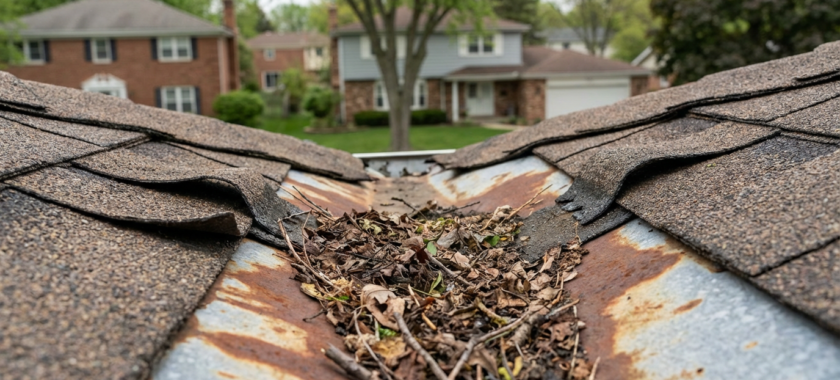
Debris Collects Inside Valleys
Leaves, branches, pine needles, and dirt naturally settle inside valleys.
When debris blocks water flow:
- Water begins pooling.
- Moisture remains trapped.
- Shingles stay wet longer.
- Materials deteriorate faster.
Eventually, trapped water finds a path beneath the roofing materials.
Regular cleaning greatly reduces the need for future roof leak repair.
Flashing Can Deteriorate
Most valleys contain metal flashing beneath or alongside shingles.
Over time, flashing may:
- Rust
- Separate
- Bend
- Crack
- Corrode
When flashing fails, water easily enters beneath the roofing system.
Professional roof flashing repair is often enough if the surrounding shingles remain in good condition.
Improper Installation
Many roof leaks begin on the day the roof is installed.
Common mistakes include:
- Incorrect nail placement
- Poor flashing alignment
- Inadequate waterproof membrane
- Improper overlap
- Low-quality materials
These mistakes may remain hidden for years before eventually causing leaks.
Ice Dams During Winter
In colder climates, melting snow often refreezes near roof edges.
Ice dams prevent proper drainage, forcing water back underneath shingles.
Roof valleys are especially vulnerable because large amounts of melting snow collect there first.
Aging Roofing Materials
As roofs age:
- Shingles become brittle.
- Sealants dry out.
- Flashing weakens.
- Underlayment deteriorates.
Since valleys experience the most water exposure, they often fail before the rest of the roof.
Common Signs Your Roof Valley Is Leaking
Early detection can prevent expensive repairs.
Watch for:
- Water stains on ceilings
- Damp attic insulation
- Mold growth
- Missing shingles near valleys
- Rusted flashing
- Cracked sealant
- Debris accumulation
- Sagging roof decking
- Dripping water after storms
Ignoring these warning signs often leads to larger structural problems.
Example: How a Small Valley Leak Becomes a Major Repair
Imagine a homeowner notices a small ceiling stain after heavy rain.
Instead of scheduling an inspection, they wait several months.
Meanwhile:
- Water continues entering through the valley.
- Roof decking begins rotting.
- Mold develops in the attic.
- Insulation becomes saturated.
- Interior drywall weakens.
What could have been a simple roof valley repair turns into a much larger restoration project involving roofing, insulation, drywall, and painting.
Open Valley vs Closed Valley Roofing
Feature | Open Valley | Closed Valley |
Water Flow | Excellent | Good |
Lifespan | Longer | Moderate |
Maintenance | Easier | More difficult |
Debris Removal | Simple | Can trap debris |
Leak Resistance | Higher when installed correctly | Depends heavily on installation |
Appearance | Metal visible | Shingles cover valley |
Both systems perform well when installed properly, but open valleys generally provide better long-term drainage.
Roof Valley Repair vs Full Roof Replacement
Roof Valley Repair | Roof Replacement |
Localized damage | Extensive roof damage |
Lower cost | Higher investment |
Faster completion | Longer project |
Preserves good roofing | Replaces entire system |
Best for isolated leaks | Best for aging roofs |
An experienced roofing contractor can determine which option is more cost-effective after a thorough inspection.
Roof Valley Repair Costs
Repair costs vary depending on roof size, materials, accessibility, and the extent of damage.
Typical estimates include:
Service | Estimated Cost (USD) |
Roof inspection | $150–$350 |
Minor roof valley repair | $300–$700 |
Roof flashing repair | $400–$1,000 |
Valley shingle replacement | $500–$1,200 |
Decking repair | $800–$2,500 |
Major structural repair | $2,500–$6,000+ |
Prompt repairs are almost always less expensive than waiting until water damages the roof structure.
Maintenance Guide to Prevent Roof Valley Leaks
Routine maintenance helps extend the life of your roof and reduces the risk of unexpected leaks.
Clean Roof Valleys Regularly
Remove leaves, branches, moss, and other debris at least twice a year to keep water flowing freely.
Inspect After Severe Weather
Check valleys after heavy rain, snow, or wind for damaged shingles, loose flashing, or visible debris.
Trim Nearby Trees
Overhanging branches drop leaves and can scrape roofing materials during storms. Keeping trees trimmed reduces debris buildup and minimizes damage.
Check Flashing
Inspect metal flashing for rust, lifting edges, or gaps where water could enter.
Keep Gutters Clear
Blocked gutters can force water back toward the roof valleys, increasing the likelihood of leaks.
Schedule Annual Professional Inspections
A qualified roofing contractor can identify minor issues before they develop into costly repairs.
When Should You Call a Roofing Contractor?
Contact a roofing professional if you notice:
- Water stains inside your home.
- Missing shingles in a valley.
- Rusted or damaged flashing.
- Persistent debris buildup.
- Moss growing in valleys.
- Multiple leaks after rain.
- Sagging roof sections.
- Signs of rot or mold.
Delaying repairs often increases both the extent of the damage and the overall repair cost.
Frequently Asked Questions
How long do roof valleys last?
A well-installed roof valley can last 20–30 years or more, depending on roofing materials, weather conditions, and regular maintenance.
Can I repair a roof valley myself?
Minor debris removal may be suitable for homeowners, but repairs involving flashing, shingles, or structural components should be handled by a professional to avoid further damage.
Why do roof valleys leak before other roof areas?
Because they channel the highest volume of water, roof valleys experience greater wear, more debris accumulation, and increased stress than other roof sections.
Is replacing flashing enough to stop a valley leak?
If the flashing is the only damaged component, replacing it may solve the problem. However, damaged shingles, underlayment, or decking may also need attention.
How often should roof valleys be inspected?
Inspect them at least twice a year and after major storms to catch problems early.
Final Thoughts
Understanding why roof valleys are the most common source of roof leaks helps homeowners recognize one of the roof’s most vulnerable areas before minor problems become major expenses. Since valleys direct large volumes of water, they are exposed to constant wear from rain, debris, snow, and changing weather conditions. Without regular inspections and maintenance, small issues like damaged flashing or loose shingles can quickly lead to interior water damage, mold growth, and costly structural repairs.
Routine cleaning, timely inspections, and prompt repairs are the best ways to keep your roof performing as intended. Whether you need a simple roof flashing repair, a targeted roof valley repair, or a complete evaluation after severe weather, working with an experienced roofing contractor ensures problems are identified early and repaired correctly. Investing in preventative maintenance today can save significant repair costs and help extend the life of your entire roofing system.
Protect Your Home Before a Small Roof Leak Turns Into Costly Damage
Roof valley leaks rarely fix themselves. What starts as a minor issue can quickly lead to water damage, mold growth, rotting roof decking, and expensive structural repairs. The sooner you address the problem, the more money and stress you can save.
At Tymey Roofing, our experienced roofing specialists provide thorough roof inspections, expert roof valley repairs, roof flashing repairs, and complete roof repair solutions for homeowners across Coquitlam, Vancouver, Burnaby, Surrey, and the Lower Mainland.
Why Choose Tymey Roofing?
✔ Free, no-obligation estimates
✔ Experienced and licensed roofing professionals
✔ High-quality materials and workmanship
✔ Honest pricing with no hidden fees
✔ Fast response for roof leak emergencies
✔ Serving Coquitlam, Vancouver, Burnaby, Surrey & the Lower Mainland
📧 Email: info@tymeyroofing.com
🌐 Website: https://tymeyroofing.com
Request your FREE roof inspection and estimate today and let Tymey Roofing keep your home safe, dry, and protected for years to come.
Leave a Reply